
Why is Walmart Diversifying Sourcing from China, and How Difficult is the Transition?
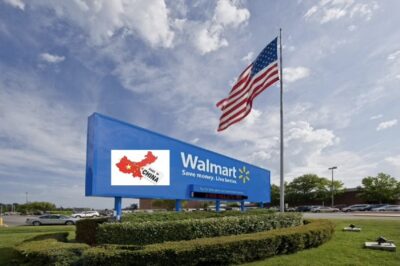
Walmart is diversifying its sourcing from China primarily due to decades of friction with the Chinese government and the significant impact of the 2018 Section 301 tariffs imposed by the U.S. Despite these pressures, a complete decoupling is extremely difficult because of Walmart's deep, decades-long investment in China, where it has operated since 1996 and now runs 342 retail stores, making it the largest retail chain in China with $158 billion in RMB sales annually. This extensive history and current market presence complicate any rapid pivot away from the country. The diversification efforts are accelerating, but the scale of operations, involving over 400,000 SKUs and 4,000+ suppliers, makes a full shift a monumental challenge. Key categories like apparel, footwear, and textiles are moving to Vietnam; home goods and ceramics to India; and furniture, plastics, and seasonal goods to Mexico, leveraging advantages like lower tariffs, nearshoring benefits, and established manufacturing clusters in these alternative countries. However, high-complexity electronics, lithium-ion battery products, and precision tools remain heavily China-dependent due to the unmatched ecosystem depth and integrated supply chains in regions like Shenzhen and Suzhou.
Walmart is diversifying its sourcing from China primarily due to decades of friction with the Chinese government and the significant impact of the 2018 Section 301 tariffs imposed by the U.S. Despite these pressures, a complete decoupling is extremely difficult because of Walmart's deep, decades-long investment in China, where it has operated since 1996 and now runs 342 retail stores, making it the largest retail chain in China with $158 billion in RMB sales annually. This extensive history and current market presence complicate any rapid pivot away from the country. The diversification efforts are accelerating, but the scale of operations, involving over 400,000 SKUs and 4,000+ suppliers, makes a full shift a monumental challenge. Key categories like apparel, footwear, and textiles are moving to Vietnam; home goods and ceramics to India; and furniture, plastics, and seasonal goods to Mexico, leveraging advantages like lower tariffs, nearshoring benefits, and established manufacturing clusters in these alternative countries. However, high-complexity electronics, lithium-ion battery products, and precision tools remain heavily China-dependent due to the unmatched ecosystem depth and integrated supply chains in regions like Shenzhen and Suzhou.
Walmart is diversifying its sourcing from China primarily due to decades of friction with the Chinese government and the significant impact of the 2018 Section 301 tariffs imposed by the U.S. Despite these pressures, a complete decoupling is extremely difficult because of Walmart's deep, decades-long investment in China, where it has operated since 1996 and now runs 342 retail stores, making it the largest retail chain in China with $158 billion in RMB sales annually. This extensive history and current market presence complicate any rapid pivot away from the country. The diversification efforts are accelerating, but the scale of operations, involving over 400,000 SKUs and 4,000+ suppliers, makes a full shift a monumental challenge. Key categories like apparel, footwear, and textiles are moving to Vietnam; home goods and ceramics to India; and furniture, plastics, and seasonal goods to Mexico, leveraging advantages like lower tariffs, nearshoring benefits, and established manufacturing clusters in these alternative countries. However, high-complexity electronics, lithium-ion battery products, and precision tools remain heavily China-dependent due to the unmatched ecosystem depth and integrated supply chains in regions like Shenzhen and Suzhou.